
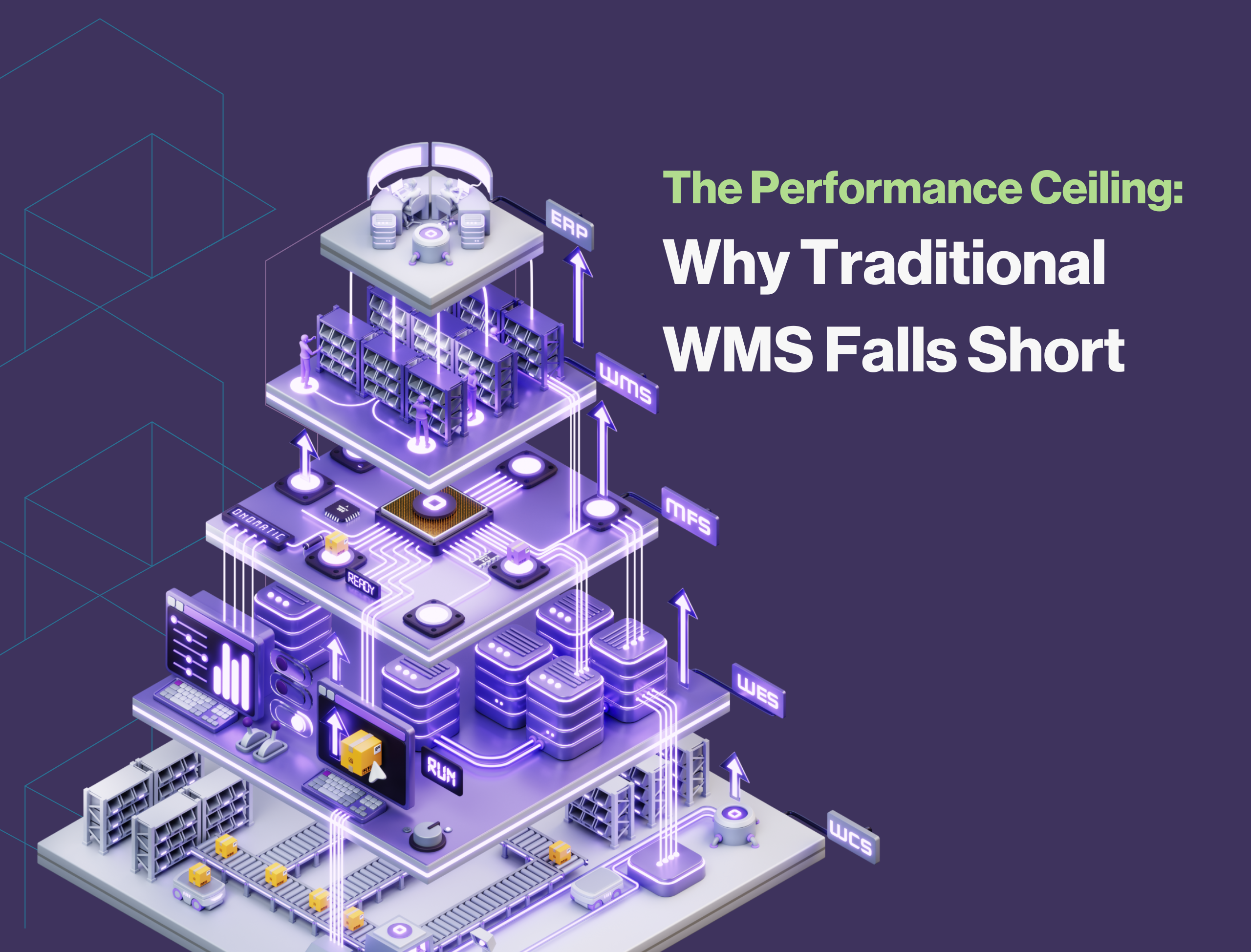
The Performance Ceiling: Why Traditional WMS Falls Short

Onomatic

Updated January 20, 2026


Break Through the Performance Ceiling

This field is for validation purposes and should be left unchanged.

Legacy WMS architectures often struggle to keep pace with the complexities of modern automation, leading to disconnected silos and operational friction. Learn how to unlock the latent capacity of your equipment without the risk or cost of a full replacement.

Synchronize Your Warehouse Intelligence

This guide explores how Onomatic serves as a central brain, intelligently synchronizing real-time data to direct the activities of both automated and human agents. Discover how facilities are using this orchestration layer to process thousands of additional lines per hour and achieve same-day shipping for 62% of their volume.

See Orchestration In Action at MODEX 2026

Join us April 13–16 in Atlanta to see these solutions firsthand. Visit Onomatic at Booth C12099 to witness how next-generation orchestration can transform your supply chain.

Learn More About Onomatic

Frequently Asked Questions (FAQ)

Have questions about our services or how to get started? Our FAQ section provides clear, concise answers to the most common inquiries.

A warehouse orchestration platform acts as a central “brain” for your automated hardware, like a G2P carousel. While a WMS or ERP knows what orders need to be filled, the orchestration platform determines the most efficient way to execute them. It analyzes the queue of picking and putaway orders and instructs the automation on the optimal sequence of tasks, eliminating indecision and turning a disconnected piece of hardware into a high-performance system.

Yes. A key benefit of a warehouse orchestration platform like Onomatic’s is that it is “hardware agnostic.” It is designed to sit between your existing Warehouse Management System (WMS) or ERP and your automation equipment. The platform receives orders from your primary software and translates them into efficient commands for your hardware, preserving your initial investment and enhancing its performance without requiring a complete system overhaul.

A Warehouse Management System (WMS) is primarily responsible for inventory management—tracking what you have and where it is. A warehouse orchestration platform specializes in execution—directing the people and automation on the floor. It takes the “what to do” from the WMS and figures out the “how to do it most efficiently,” synchronizing different systems and hardware to optimize the physical workflow in real-time. Onomatic combines the two systems into one seamless platform, ensuring both accurate data tracking and optimized direction of human and robotic agents.