
Warehouses Are Changing — Are You Keeping Up?
January 30, 2026 | 2 min read
2026 has arrived with a clear mandate: efficiency is no longer enough. As global markets face continued labor shortages and heightened customer expectations for same-day delivery, operators have been forced to think long and hard about not just which automated equipment to purchase, but how the software stack will ultimately support and continually optimize those systems.
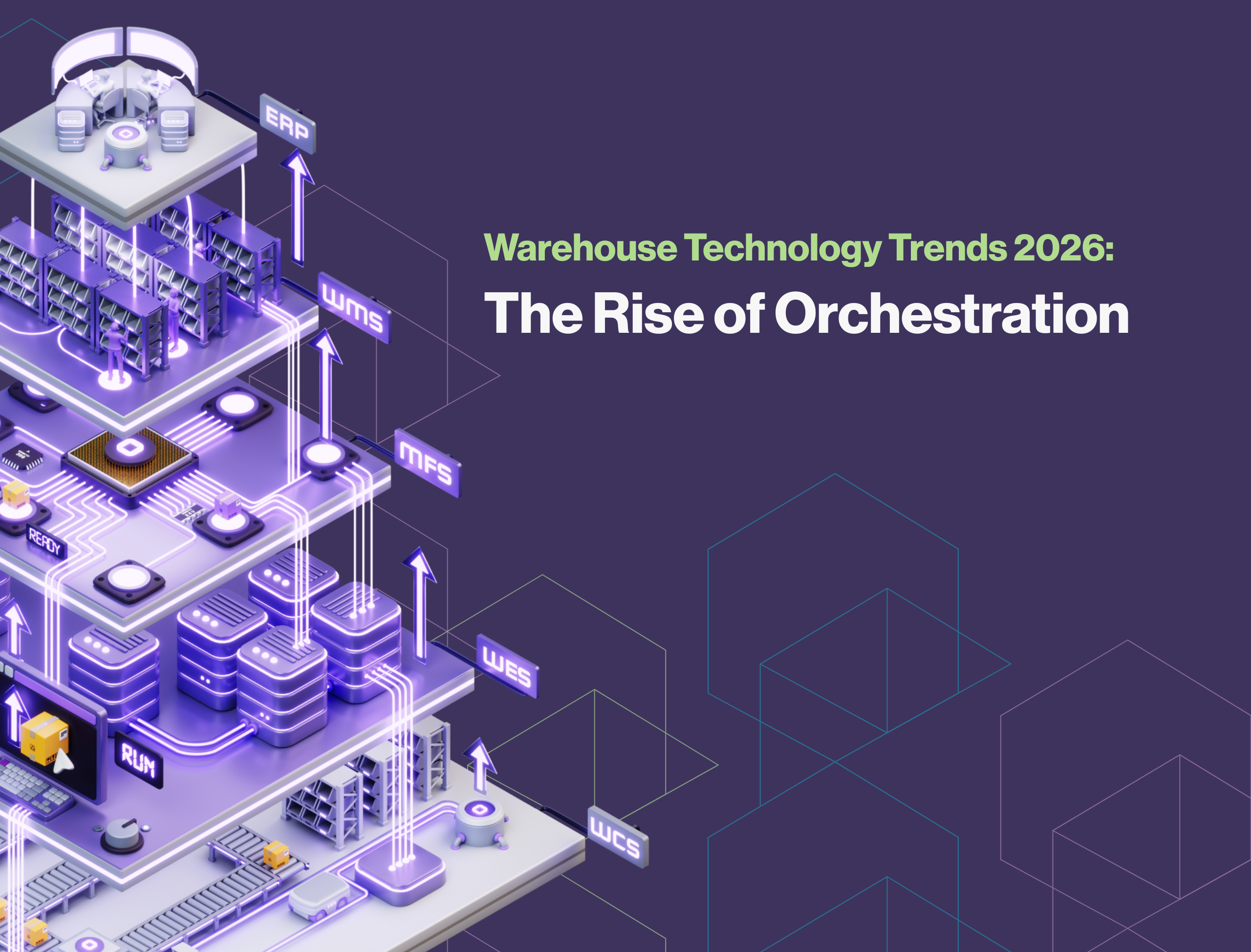
The era of disjointed collections of hardware and software from different vendors is officially over. In its place, 2026 is defined by the integrated warehouse technology stack, where software intelligence acts as the central nervous system for every physical movement on the floor, regardless of if it is managed by human or automated agents.
The Shift from “What” to “How”
For years, the conversation revolved around what processes to automate. While that is still an extremely important question, these questions go deeper today.
According to recent industry data, over 75% of warehouse leaders agree that integration is essential, but only a small fraction have achieved a fully unified environment. This gap is where the biggest competitive advantages are being won in 2026. The winners are moving away from reactive problem-solving toward predictive management, using intelligent orchestration platforms to balance workloads and task queues across human and robotic fleets in real time.
Why Orchestration is the New Baseline
Orchestration isn’t a buzzword, it’s a performance strategy. A true orchestration layer like Onomatic sits between your general business systems (like your ERP) and your warehouse technology stack. It solves the three primary crises facing warehouses today:
-
The Integration Gap: Most WMS platforms treat additional automation as one-off additions, often requiring complex and cumbersome integrations efforts just to get them operational. In 2026, integration must be native. Orchestration allows you to combine legacy conveyors with cutting-edge AMRs and pick-to-light systems without expensive, one-off custom code.
-
Labor Volatility: Orchestration empowers people. By orchestrating automated systems and directing human labor, warehouses can run safer, more efficiently, and without the need for humans to complete boring, repetitive tasks.
-
The “Frankenstack” Problem: When your sorting system doesn’t know what your packing station is doing, bottlenecks are inevitable. Orchestration ensures every piece of equipment operates as one synchronized ecosystem, directing material flow through your warehouse and getting product into the hands of your customers quicker.
Onomatic: Not Just Another WMS
In a market crowded with legacy players, Onomatic has carved out a unique position as a WMS with native multi-agent orchestration capabilities. While traditional systems focus on recording where things are, Onomatic focuses on directing how things move.
By unifying WMS, WES (Warehouse Execution System), and WCS (Warehouse Control System) into a single, cloud-first platform, Onomatic allows operators to:
-
Modernize Legacy Gear: Bring digital-era efficiency to existing equipment.
-
Scale at Will: Add new robotics or zones without rewriting your entire operational logic.
-
Optimize in Real-Time: Automatically reallocate missions based on live variables like congestion or equipment downtime.
Looking Ahead
As we look deeper into 2026, the trend toward modular and flexible automation will only accelerate. Whether you are a 3PL managing multi-client demand or a manufacturer coordinating production-side logistics, the ability to “plug and play” with your technology stack is your ultimate survival tool.
The “smart” warehouse of 2026 isn’t the one with the most robots—it’s the one where the robots, the people, and the software are finally speaking the same language.
Is your warehouse technology stack falling behind? Book a demo to see how Onomatic can help.